Ball VS Ball Balls — The 40+ Ball Collection, Explained
Ball VS Ball has 40+ balls, each with its own skill. How the collection works: the 3-ball round offer, the once-per-match free pick, Coins unlocks, and trading.
FAQ
How many balls are in Ball VS Ball?
How do I unlock new balls?
What does the once-per-match free pick do?
Is there a Ball VS Ball tier list?
How does the ball collection work?
Ball VS Ball is built around a collection: 40+ balls, each with its own skill, per the official game description. You never buy a ball mid-fight — you grow the collection between matches, and the collection decides what you can bring into the arena. Three confirmed systems feed it:
- The shop — Coins (from wins and codes) unlock new balls.
- Trading — players trade balls directly; see the trading guide.
- The free pick — once per match, any ball you own, free.
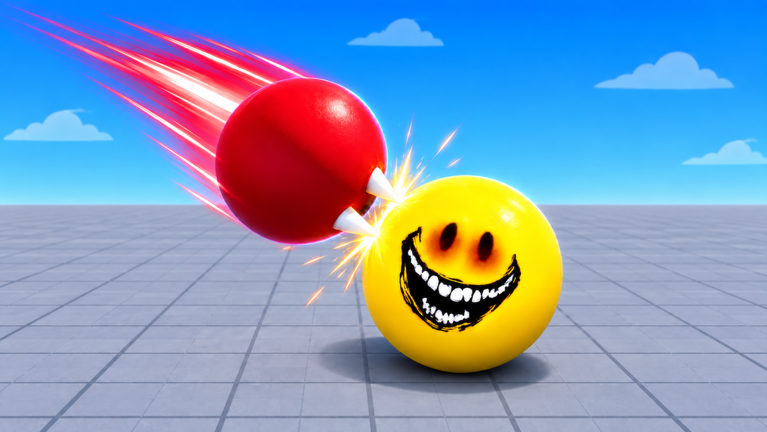
Two of the 40+, mid-collision. Image: Ball VS Ball © ATYS 3 (Roblox).
The three ways a ball gets into the arena
1. The 3-ball round offer. Each round, the game offers three random balls. This is the default path and the game’s main source of variety — every match starts with a read of the offer: which of these three skills fits the mode I queued?
2. The once-per-match free pick. If the offer is weak, you may instead pick any ball from your collection, free, once per match. Use it when the random offer cannot answer what the enemy queue is doing. Budget it like a cooldown — burning it in match one of a session leaves matches two and three at the mercy of the RNG.
3. Unlocking for the collection. The shop turns Coins into new balls. Wins earn Coins; the six active codes earn 600 more (tracked on our codes page). What the shop stocks and at what price is not officially documented — check in-game, and be suspicious of any external price list.
What a “skill” means here
The official description confirms every ball has a skill, and community sources describe collision extras — knives, poison spikes, talons — but there is no official skill catalog: no names, no numbers, no rarity table. That is unusual for a collection game, and it is exactly why this page stays short:
- We will not publish an invented 40-ball table. A fake stat list is worse than no list.
- The in-game collection menu is the complete list — always current, unlike any wiki.
- As updates land (six so far, UPD1–UPD6), we track confirmed additions and note community reports as reports.
Collection routine for new players
- Redeem all six codes — 600 Coins of seed money for the shop (codes page).
- Join the ATYS 3 group for the free reward before spending anything.
- Buy one ball early rather than hoarding Coins — an extra ball means an extra option in every 3-ball offer.
- Learn one ball per session. After each match, note what your ball’s skill actually did. Losses teach the catalog faster than wins.
- Trade duplicates once trading is familiar — the trading guide covers safe-trading habits first.
The arena side of each ball — how skills interact with collisions, corners and the aim line — is covered in the arena guide.
Related Articles
codes
Ball VS Ball Codes (October 2026) — All Working Codes & Rewards
All 6 working Ball VS Ball codes for October 2026: UPD1 through UPD6, each worth 100 Coins. Rewards, redeem steps, where new codes drop, and expiry tracking.
guides
Ball VS Ball Beginner Guide — How a Match Plays Out
New to Ball VS Ball? Learn the full match flow: the 3-ball pick, aiming, auto-battle collisions, Coins, the group reward, and 1v1/2v2 modes — with sources.
guides
Ball VS Ball Trading Guide — What Is Confirmed About Trading Balls
Trading is an official Ball VS Ball feature: what's confirmed about trading balls, what is not documented, and safe-trading practices that apply to any Roblox game.
Was this helpful?
Thanks for the feedback!